
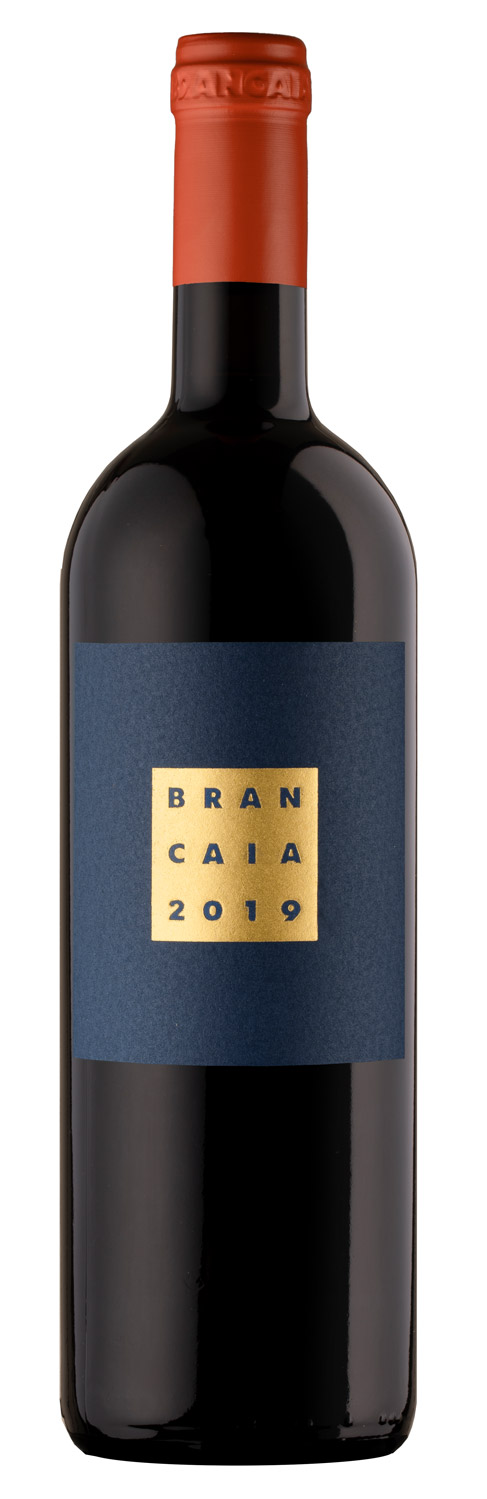
75cl
Il Blu 2019 Brancaia
Vendor code : 11
The Brancaia estate was established in 1981 by a Swiss couple who discovered and restored an abandoned property in Castellina, Chianti Classico. By 1983, they were producing quality wine, and in 1988 they introduced a new cuvée made from Sangiovese, Merlot, and Cabernet Sauvignon, which later became known as ‘Il Blu.’ This wine played a key role in establishing Brancaia among Tuscany's notable estates.
Not available
Il Blu 2019 by Brancaia is a popular Tuscan red wine made from a blend of 80% Merlot, 10% Sangiovese, and 10% Cabernet Sauvignon. The grapes are sourced from Brancaia's estates in Castellina and Radda in Chianti. The wine presents aromas of currant, violet, and cocoa. On the palate, it delivers flavors of currant and wild berries with a smooth, full finish. The tannins are fine, firm, and creamy, providing structure and balance. The vinification process involves aging each vineyard's production and variety separately in barriques—two-thirds of which are new—for 18 months. The final blend is refined in concrete tanks for three months and further aged in bottle for a year. This wine pairs well with dark meats like beef or lamb and roasted or braised game. Il Blu 2019 has received scores of 96 points from James Suckling, 95 points from Wine Advocate (Monica Larner) and Vinous (Antonio Galloni), and 93 points from Wine Spectator (Bruce Sanderson). With an aging potential of up to 25 years, it highlights Brancaia's focus on quality and respect for the environment.
Brancaia is a Tuscan domaine renowned for producing exceptional wines from both the Chianti Classico area and the Maremma region along the Tuscan coast. Established in 1981, it has gained critical acclaim for its high-quality wines and striking modern labels. The domaine encompasses three vineyards: two in Chianti Classico, predominantly planted with Sangiovese, and one in Maremma near Grosseto, which features Bordeaux varieties alongside a smaller proportion of Sangiovese. Together, these cover approximately 80 hectares (200 acres). Brancaia operates two gravity-fed wineries in Chianti and Maremma, each designed with three levels to optimize winemaking processes. Grapes from individual varieties and parcels are fermented separately in cone-shaped, temperature-controlled steel tanks, with gentle punchdowns during vinification. All wines are aged in French oak barrels and casks for 12 to 20 months before blending and bottling. The flagship wine, Il Blu, is an IGT Toscana blend of Sangiovese, Merlot, and a touch of Cabernet Sauvignon, sourced from vineyards in Chianti Classico. It undergoes 20 months of aging in French barriques before release. From Maremma, the standout wine is Ilatraia, also an IGT Toscana blend made from Cabernet Sauvignon, Petit Verdot, and Cabernet Franc. Notably, the 2012 vintage earned a spot in Wine Spectator’s Top 100 Wines in 2015—one of three such accolades since 2005. Brancaia's portfolio includes four additional red wines: a Chianti Classico Riserva, a Chianti Classico, N°2 (a Maremma Cabernet Sauvignon), and Tre, a Sangiovese-driven blend with contributions from Cabernet Sauvignon and Merlot. The lineup also features a Merlot-based rosé (Rosé), a white wine blend (Il Bianco) combining Sauvignon Blanc with Gewürztraminer, Sémillon, and Viognier, and Stella, a sparkling Chardonnay. The domaine's journey began in 1981 when Swiss couple Bruno and Brigitte Widmer purchased the historic but neglected Brancaia property in Castellina in Chianti, along with its four hectares (10 acres) of vines. With guidance from the Mazzei family of Castello di Fonterutoli, the estate quickly gained recognition, winning a blind Chianti Classico tasting hosted by Vinum magazine in 1986. Brancaia's now-iconic label design was introduced in 1988, followed by the acquisition of a 53-hectare (130-acre) site in Radda in 1989. In 1994, the domaine achieved the prestigious Tre Bicchieri (Three Glasses) rating from Gambero Rosso. In 1998, the Widmers expanded to the Maremma coast, planting vines across their 82-hectare (200-acre) estate. The wines TRE and Ilatraia debuted in 2000 and 2002, respectively. By 2019, all three vineyards and wineries had earned official organic certification, further cementing Brancaia's commitment to sustainable winemaking.
Reviews from critics
95/100
1 points
95-100
1
90-94
0
85-89
0
80-84
0
75-79
0
0-74
0
Wine Advocate
Not available