
New
75cl
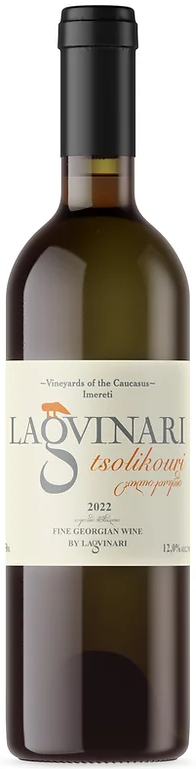
Lagvinari Tsolikouri 2022
Vendor code : 986
Lagvinari is a small organic winery in Georgia, founded in 2011 by Dr. Eko Glonti, a former physician and geologist who works closely with local winegrowers. Glonti uses local grape varieties and traditional winemaking methods to produce his wines. The wines are fermented and aged in clay egg-shaped vessels known as kvevri, an ancient Georgian winemaking method recognized as a UNESCO World Heritage practice. Lagvinari creates wines of different styles according to the Kakhetian or Imeretian methods. These wines are featured on the menus of several Michelin-starred restaurants!
Color
White
Fortress
12%
Region
Imereti
Grape
Tsolikouri
Vintage
2022
Producer
Lagvinari
Country
Georgia
Lagvinari Tsolikouri is an amber dry wine made from autochthonous Tsolikouri grapes grown in the Imereti region. Following the traditional Georgian winemaking method, fermentation and maturation take place in egg-shaped kvevri clay jugs. The wine is not filtered or clarified before bottling. Its aroma offers a blend of freshly dried fruits and a hint of smoke. Full-bodied, with moderate acidity and light tannins, this Tsolikouri is crafted in the Lagvinari house style: rich, complex, and full-bodied.
Lagvinari produces Tsolikouri wine in the Imereti region, which is renowned for its white wines. The terroir of this region is ideal for creating wines with high acidity, freshness, and bright flavors. Imereti mainly uses classical winemaking techniques, but it's noteworthy that white wine here is made using methods traditionally reserved for red wines, with the active use of kvevri (clay vessels), known locally as churi. Unlike in Kakheti, the ratio of grape must to grape juice in Imereti is much smaller, which gives the wines a finer structure and greater elegance. A churi (kvevri) is a specially shaped clay vessel that is buried underground in an open area. The constant temperature below ground and the micro-oxidation processes within the clay give the wine its amber color. These conditions also significantly soften and refine the structure of the tannins, making them velvety and smooth.
Reviews from critics
0/100
0 points
95-100
0
90-94
0
85-89
0
80-84
0
75-79
0
0-74
0
No reviews yet