
75cl
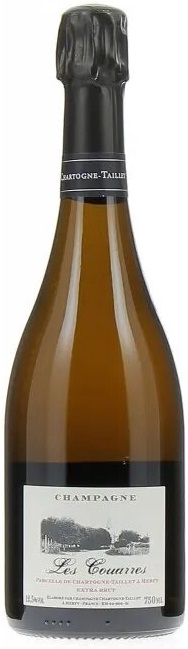
Champagne Chartogne-Taillet Les Couarres Extra Brut 2018
Vendor code : 749
Alexandre Chartogne has released an interesting set of wines from the 2018 vintage, a year that exhibits some variability. The hallmark of these new releases is their vibrant expression of terroir and diversity, particularly notable in such a warm year. The Champagne is fermented and aged in barrels, imparting subtle woody tones. However, the oak enhances texture and depth without disrupting the wine's balance.
Color
White
Fortress
12.5%
Country
France
Region
Champagne
Vintage
2018
Producer
Champagne Chartogne-Taillet
Grape
Chardonnay; Pinot Noir
Not available
Champagne Chartogne-Taillet Les Couarres Extra Brut 2018: The dosage is 4-5 grams per liter, with dégorgement in February 2023. This wine is a blend of 60% Pinot Noir and 40% Chardonnay, fermented and barrel-aged in a style that can be best described as ‘Burgundian’ in inspiration. The 2018 Les Couarres Extra Brut is not a mass-produced corporate product. Notes of silk, quince, spices, and wet stone (derived from the tuff soil) add an exotic touch to the flavor profile. The taste is pronounced, with high acidity that highlights the precision of this Champagne's craftsmanship. It is recommended to drink between 2024 and 2033. Notably, Alexandre Chartogne worked with Anselme Selosse, whose approach to viticulture significantly influenced him, though their winemaking styles are markedly different.
The Les Couarres vineyard is located in the center of the Merfy terroir, in the least well-drained area of the village. Two types of soil are found on this site: tuff and clay. Chartogne-Taillet works both plots almost equally, benefiting from greater moisture reserves than neighboring plots. This helps maintain the moisture levels necessary to prevent water deficits in the vines planted in this lieu-dit. While many soils in the village dry out quickly and can be ploughed shortly after rain, the lieu-dit Les Couarres requires patience. Due to this and the topography of the site, the vines here are particularly susceptible to frost. The yields from this plot are the most generous in Chartogne-Taillet’s holdings and often need to be controlled through intensive pruning and the removal of every second shoot. The wines from Les Couarres are the slowest to develop, requiring careful handling and protection to avoid rapid oxidation. Chartogne-Taillet considers it essential to protect these Champagnes from oxygen right from the pressing stage, opting for barrels that have held two or three wines and are stored in a humid cellar environment. Attention is also paid to controlling the ‘angel’s share’ (evaporation) to prevent the wine from weakening due to excessive contact with air. The barrels in which these wines are aged are regularly topped up to minimize air exposure.
Reviews from critics
94/100
2 points
95-100
0
90-94
2
85-89
0
80-84
0
75-79
0
0-74
0
Vinous
The 2018 Extra-Brut Les Couarres is a dense, potent Champagne. The blend of 60% Pinot Noir and 40% Chardonnay works so well here. A wine of substance and presence, Les Couarres impresses with its poise more than anything else. White flowers, kirsch, spice, Poire William, and crushed rocks lend an exotic flair throughout. I especially admire the precision here. This is beautifully rendered. Dosage is 4-5 grams per liter. Disgorged: February 2023. - Antonio Galloni on November 2023.
Wine Spectator
This vinous-style Champagne draws you into the glass with a beautiful nose of ripe fruit, floral and mineral notes, with the softly effervescent, fine mousse carrying layers of ripe mulberry and poached quince, sliced almond and bread dough, fleur de sel and ground anise and cardamom flavors. Long and sleek, with underlying hints of chalk and saline pushing through to linger on the finish. Chardonnay and Pinot Noir. Disgorged February 2023. Drink now through 2033. - Alison Napjus, Wine Spectator.
Not available