
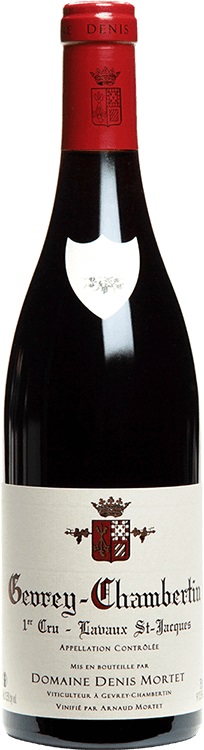
75cl
Domaine Denis Mortet Gevrey-Chambertin 1er Cru "Lavaux St-Jacques" 2020
Vendor code : 753
Arnaud Mortet on the 2020 vintage: "I decided to start picking on August 25 and harvested all 16 hectares in just seven days. The bad news was that although the fruit was mostly clean, there wasn't much to pick because the berries had hardly any juice. Therefore, even though little or no sorting was required, yields averaged only 25 hl/ha. Potential alcohol levels were very good but not too high, averaging 13%, down from 13.2-13.8% in 2019. I used 50 to 70% whole bunches in a soft vinification process, as the skins were very thick. I really like the style of the 2020 wines because, while they are riper than usual, they are also very fresh, energetic, and concentrated.
Color
Red
Country
France
Grape
Pinot Noir
Region
Burgundy
Vintage
2020
Producer
Domaine Denis Mortet
Not available
Gevrey-Chambertin 1er Cru "Lavaux St-Jacques" 2020 is a very complex, long, and deep wine that needs time to open up. But when it does, it possesses every desirable quality: a tightly-knit, velvety smooth texture, elegant fruitiness, and an almost never-ending finish. This plot of vines faces fully south on a steep slope, receiving optimal sunlight during the day. At night, the proximity to the valley brings significantly cooler temperatures, creating a temperature contrast that is exceptionally well-suited for the cultivation of Pinot Noir. The vines boast a mature heritage, with an average age of 60 years. The average production is 6,000 bottles. Fermentation is carried out using only natural yeasts, and the wine is matured for 18 months in oak barrels: 70% in new barrels and 30% in once-used barrels.
Arnaud continues Denis' dream of producing more refined wines, clearly drawing closer to the style of his uncle Charles Rousseau's wines, yet without sacrificing depth, intensity, or consistency across the range—an area where Rousseau sometimes faltered. Denis had already begun to move away from strong extraction in pursuit of greater elegance, but Arnaud has taken this even further, reducing both the length and intensity of macerations and the percentage of new oak used. Meanwhile, the work in the vineyards is at an all-time high. A horse is now used to plow all the 1er and Grand Cru vineyards, minimizing soil compaction, and organic and biodynamic practices are being introduced in these plots. Machinery is no longer used in any of the vineyards. Yields remain very low, and lower yields coupled with strict selection always result in richer, fuller wines—at least when young. The talented Arnaud Mortet, who now manages 16 hectares of vineyards, noted that in 2020, "the growing season was not too difficult because it was so hot and dry that there was not much disease pressure. There was a little bit of hydraulic stress, but overall, all the work we've done with the vines over the years really paid off in a year like 2020 because the root systems are well-developed, allowing the vines to find enough nutrition and water.
Reviews from critics
95/100
2 points
95-100
2
90-94
0
85-89
0
80-84
0
75-79
0
0-74
0
Wine Advocate
William Kelley: "Aromas of red berries, plums, rose petals, sweet spices and forest floor introduce the 2020 Gevrey-Chambertin 1er Cru Lavaux Saint-Jacques, a medium to full-bodied, velvety and seamless wine that's layered and concentrated, with a vibrant core of fruit and a long, penetrating finish".
Wine Advocate
William Kelley: "Aromas of red berries, plums, rose petals, sweet spices and forest floor introduce the 2020 Gevrey-Chambertin 1er Cru Lavaux Saint-Jacques, a medium to full-bodied, velvety and seamless wine that's layered and concentrated, with a vibrant core of fruit and a long, penetrating finish".
Not available