
New
75cl
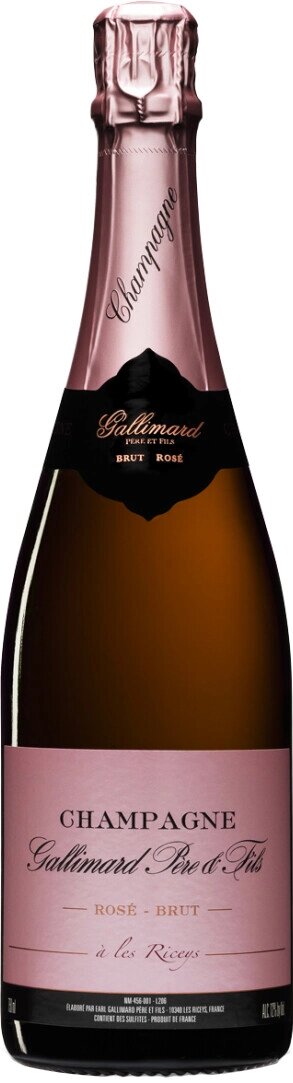
Champagne Gallimard Pere et Fils Rose Brut
Vendor code : 1325
Champagne Gallimard focuses on diverse winemaking techniques, including single-varietal and single-vintage Champagnes, precise dosages, and aging in oak barrels or egg-shaped clay amphorae. The use of perpetual Solera reserve wines further reflects their approach to crafting distinctive styles.
This Rosé Brut from Champagne Gallimard Père et Fils is made using the Rosé De Saignée method, combining 80% Pinot Noir and 20% Chardonnay. The grapes undergo a short maceration of 3-4 days, contributing to its color and character. Only one harvest is used, ensuring consistency in quality. The Champagne has a fuchsia hue with fine, persistent bubbles. The aromas feature red and black fruits with subtle, gourmand accents. On the palate, it is fresh and structured, highlighting flavors of strawberry and cherry. It complements dishes such as duck, poultry with cream sauces, and works equally well as an aperitif.
The history of Champagne Gallimard dates back to 1930, when the first bottles of Champagne were sold under the family name. However, the family's involvement in winemaking began earlier, with records showing Jules Gallimard cultivating vineyards and producing still wines—red, rosé, and occasionally white—in Les Riceys around 1880. Ernest Gallimard expanded the vineyard and production, and when his son Pierre joined, the family began crafting Champagne following the establishment of the Champagne AOC. Later, Jean and Didier Gallimard developed the domaine further, earning recognition through awards and expanding production while maintaining traditional methods. Today, Didier and Arnaud Gallimard manage the domaine, focusing on sustainable practices, expanding the vineyard, and exploring new techniques like terracotta amphora aging. Located in Les Riceys in the Côte des Bar region of the Aube department, the domaine benefits from a rich history and unique terroir. Les Riceys, a village of ancient origins dating back to Gallo-Roman times, is notable for its extensive vineyards (866 hectares), its production of three AOCs (Champagne, Coteaux Champenois, and Rosé des Riceys), and its proximity to Burgundy. The Gallimard vineyard spans 13 hectares, primarily planted with Pinot Noir (85%) and Chardonnay (15%). The terroir is characterized by Kimmeridgian marl and limestone soils, contributing to the maturity and distinctiveness of the wines. The domaine employs sustainable viticultural practices, including plowing to avoid chemical weedkillers and hand-harvesting all grapes. Winemaking takes place entirely on-site, with careful separation of Pinot Noir and Chardonnay throughout the process. Traditional methods are combined with modern techniques, including temperature control to enhance the wines' freshness and expression of terroir. Blending plays a key role, balancing grapes, quality, and vintages to achieve the desired profile. Gallimard also embraces innovative aging techniques. Chardonnay is aged in oak barrels for their "Quintessence" cuvée, and since 2014, small quantities of wine have been aged in ovoid terracotta jars. These jars create a natural vortex, enhancing the wine's complexity and preserving its purity while showcasing the characteristics of Pinot Noir and Chardonnay. The first cuvée from this method, "Amphoressence," is now available as a brut nature Champagne.
Reviews from critics
0/100
0 points
95-100
0
90-94
0
85-89
0
80-84
0
75-79
0
0-74
0
No reviews yet