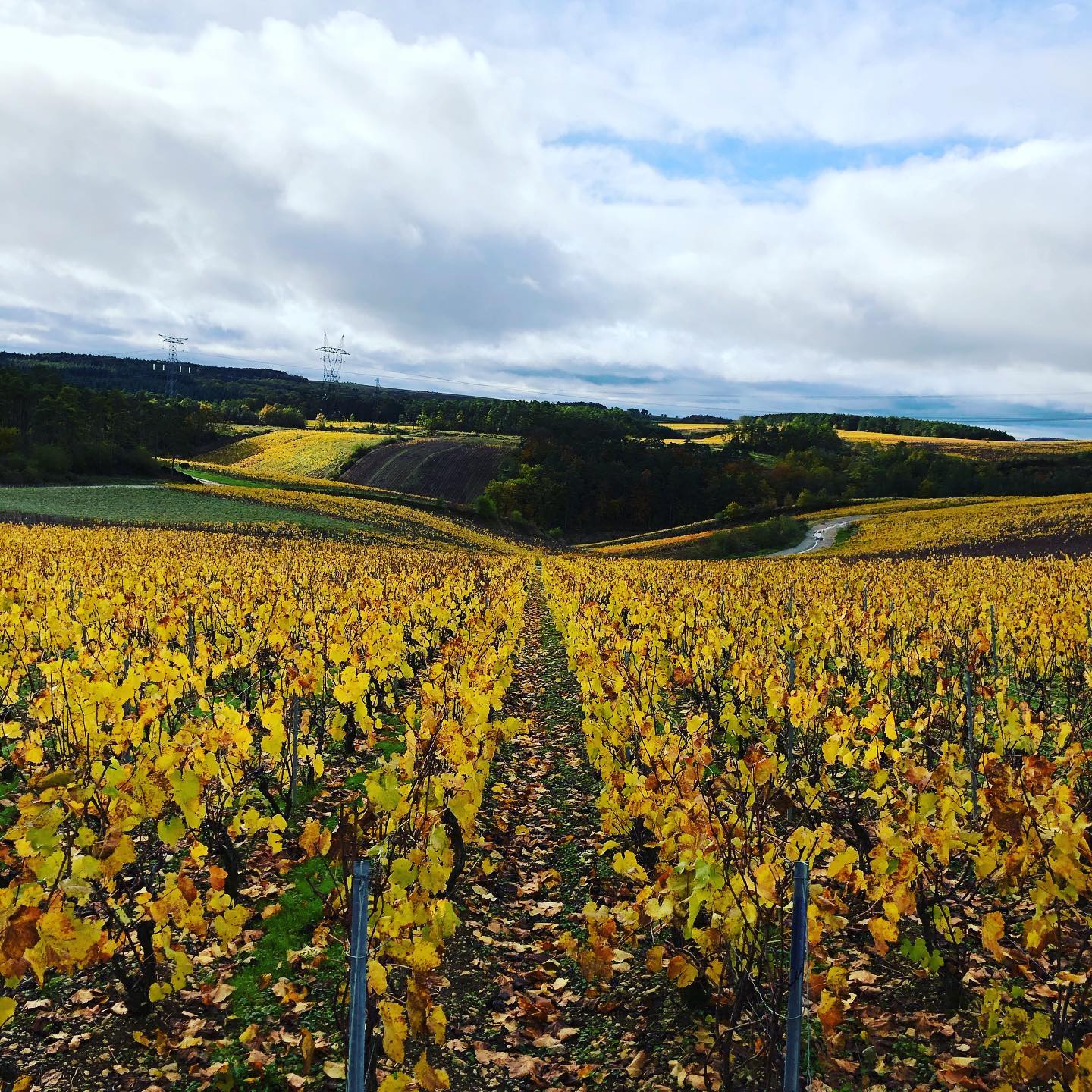
"The Historical Evolution of Aube: From Burgundy Affiliation to Champagne Innovation"

Over the past thousand years, the Aube region was historically affiliated with Burgundy, a heritage that remains evident in its geological composition. The terroir here is predominantly characterized by Kimmeridgian and Portlandian limestone, reminiscent of the soils found in Chablis. Interestingly, even today, while Aube's vineyards are situated approximately equidistant between Beaune and Avize, many aspiring young winemakers prefer to pursue their winemaking education in the former rather than the latter.
The introduction of sparkling wine production in this area is a relatively recent development. Les Riceys, renowned for its still wines crafted from Pinot Blanc, Pinot Gris, and Pinot Noir, held the spotlight for a considerable time. Meanwhile, the rest of the Côte des Bar, now a thriving hub of Champagne innovation, used to supply nearby Troyes with jug wine, crafted from grape varieties such as Gamay, Gouais, Chasselas, and Troyen. The dispute surrounding whether the Aube should be considered an integral part of the Champagne wine region, which ultimately sparked the infamous Champagne Riots of 1910 and 1911, was only definitively settled in 1927.
Aube's Unique Wine Character: Pinot Noir and Friends Take the Spotlight
Gamay was phased out from the Aube in a mere few decades, making way for the classic Champenois grape varieties. Today, this region boasts approximately 19,000 hectares of vineyards, a number only slightly less than its peak in the 19th century. Remarkably, the Aube now contributes roughly a quarter of the total Champagne production. Nevertheless, the Aube's unique identity distinguishes it within the Champagne appellation.
Pinot Noir takes center stage in the Aube's vineyards, a deliberate choice often influenced by prominent négociants. Alongside Chardonnay and Pinot Meunier, Pinot Blanc—referred to locally as Blanc vrai—plays a crucial supporting role. Its delayed bud break makes it particularly well-suited to these historically frost-prone terroirs. Furthermore, due to its more southerly location, achieving optimal ripeness in the Aube is notably more attainable. Additionally, regional weather patterns in the Aube don't necessarily mirror the rest of Champagne, resulting in distinct vintage variations in this area. This combination of factors contributes to the Aube's unique and captivating wine character.
"As one delves deeper into the wine regions, the terroirs of the Aube remain somewhat concealed from the average wine enthusiast compared to the more renowned terroirs of the Côte des Blancs or Montagne de Reims"
Common perceptions often depict the Côte des Bar as a source of opulent, full-bodied Champagnes. While this holds for specific locations, like the clay-rich soils in the village of Essoyes, the reality of the region is far more intricate. It encompasses a vast array of exposures and soil compositions. The presence of small valleys carved by tributaries of the Seine further adds to this complexity, resulting in vineyards that directly face each other but yield markedly different wines, much akin to the diversity found in Burgundy.
Indeed, attempting to categorize the Côte des Bar solely based on its communal characteristics would be overly simplistic. The region offers a rich tapestry of styles, from the precision and saline character of Champagnes born on the Portlandian limestone of Polisot to the delicate, aromatic wines emerging from the higher-altitude terroirs of Les Riceys or Celles-sur-Ource. The Côte des Bar is so multifaceted that even broad generalizations at the communal level risk oversimplification.
Montgueux Hill: Champagne's Radiant Terroir and Emmanuel Lassaigne's Influence
The Aube boasts another significant viticultural plot that has a distinct consistency: the Montgueux Hill, often called the "hill of the Goths." This isolated elevation consists of Turonian chalk, older than the limestone found in the Côte des Bar, and it commands a prominent position overlooking the Troyes plain. While Montgueux's vineyards had largely fallen into neglect, a resurgence occurred in the 1960s, with Chardonnay thriving on the sun-drenched slopes. This terroir yields wines that are both radiant and impeccably structured.
Négociants have found Montgueux to be a valuable source, yet it's primarily one grower, Emmanuel Lassaigne, who has brought this village into the limelight over the past two decades. Emmanuel crafts wines using his grapes and selectively sourced fruit from neighboring vineyards, elevating the reputation of Montgueux in the world of wine.
Aube's Rising Stars: Crafting Champagne with a Unique Artistry
Champagne stands out as one of France's most vibrant wine regions at present, and the Aube region serves as a prime illustration of this vitality. Emerging wineries in this area typically commence on a modest scale, with numerous newcomers choosing to maintain a relationship with prominent Champagne houses while concurrently crafting a limited selection of Champagnes in an artisanal manner, sourced from their finest vineyard plots. Many of these vintners opt for barrel fermentation, drawing inspiration from Burgundy and the innovative approach seen in other parts of Champagne. However, from our seasoned palate's perspective, tank fermentation or the use of previously employed oak often appears to yield superior outcomes in the Aube, akin to the effectiveness observed in Chablis.

One of the standout features within the Aube terroir is none other than Champagne Gallimard. Situated in the picturesque village of Les Riceys, nestled in the heart of the Côte des Bar, the Gallimard estate has been lovingly handed down through six generations, from father to son. Presently, Didier and Arnaud jointly oversee the family vineyard, cultivating it with a deep commitment to sustainable viticulture. Their approach is rooted in environmental stewardship, a profound connection with nature, and an unwavering dedication to expressing the unique terroir of their domain.
At Champagne Gallimard, their guiding principles encompass a spectrum of distinctive features, including single-varietal and single-vintage expressions, meticulous dosages, special aging techniques involving oak barrels and egg-shaped clay amphorae, as well as the intriguing tradition of perpetual Solera reserve wines. These attributes serve as a testament to the essence of the Gallimard estate.